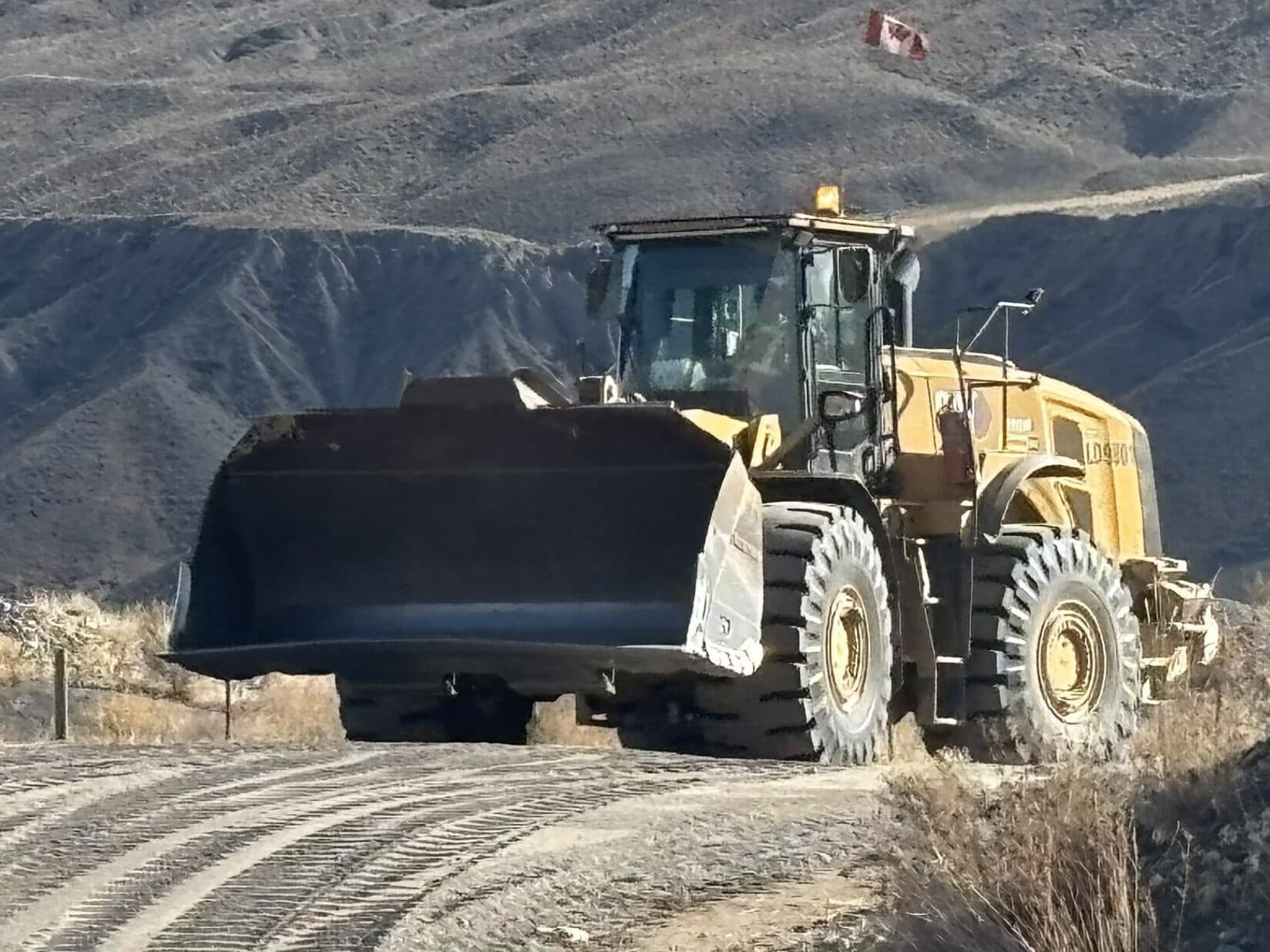
Northwest Territories projects face long supply lines, seasonal constraints, and remote sites where importing finished aggregate can dominate the budget. Mobile crushing puts production beside the source rock and the work, provided the volume, access, and schedule support the mobilization.
Cantex does not operate a pit or yard in the territory and does not deliver aggregate there from Summerland. The service offered is project-site crushing, quoted from the material, specification, tonnage, logistics, and operating window.
Mobile crushing for Yellowknife-area work.
Yellowknife sits on the north arm of Great Slave Lake and functions as the territory's administrative and transportation centre. Municipal streets, utilities, subdivisions, industrial sites, and the road corridors leading out of the city all create different access and material-handling conditions for civil and resource-support work.
Cantex can mobilize a crushing spread to suitable project-owned source material in the Yellowknife area and produce to the specification on site. A responsible estimate starts with the rock description, required gradation, testing plan, tonnage, staging footprint, road access, work window, and any site-specific safety or environmental controls.
Hay River is on the south shore of Great Slave Lake and connects to Alberta by the Mackenzie Highway. Its position as a road, rail, marine, and regional service centre makes transportation infrastructure and industrial access central to work in and around the community.
For a Hay River-area project, Cantex can process suitable local rock at the pit, quarry, or job site instead of hauling finished aggregate from the South Okanagan. Road, utility, industrial, and site-development scopes should identify the specification, quantity, feed material, access, available setup area, schedule, and testing obligations before mobilization is quoted.
Fort Smith lies beside the Slave River immediately north of the Alberta border. The community's southern location and all-season road connection make it a gateway to the territory, while local streets, utilities, institutional sites, and regional transportation work still operate within a northern construction season.
Cantex can bring the plant and crew to a Fort Smith-area source and crush project material to the referenced gradation. This is not a claim of a local Cantex pit or material inventory. Quote inputs should include feed characteristics, volume, specification, site footprint, road access, production dates, testing, and the full distance the spread must travel.
Inuvik is in the Mackenzie Delta at the northern end of the Dempster Highway corridor. Long distances, permafrost, seasonal weather, and limited staging options make advance planning especially important for road, utility, site-servicing, and resource-support work in the region.
Where suitable source material and project scale are available, Cantex can mobilize north and produce specified aggregate on the site. An Inuvik quote requires more than tonnage: it should define the feed, gradation, testing, access route, setup area, fuel and support plan, environmental constraints, schedule, and the mobilization and demobilization window.
Norman Wells is a Mackenzie River community with a long petroleum-service history. Air transport, river access, and seasonal road connections have all shaped its supply chain, which means imported construction material and heavy equipment require deliberate logistics planning.
For work near Norman Wells, mobile crushing can keep suitable source rock and finished aggregate on the same project site. Cantex can quote that service from the required gradation, estimated tonnes, material test information, access and staging plan, seasonal window, and site controls. Nothing on this page represents aggregate supply from the Summerland pit.
Diavik is a remote diamond mine site at Lac de Gras, approximately 300 kilometres northeast of Yellowknife. Production ended in March 2026, and the site is now in decommissioning and reclamation. Closure work includes earthworks, water management, demolition and removal of materials, with winter-road activity continuing.
Cantex offers mobile crushing throughout the Northwest Territories, including the Lac de Gras region. Each potential scope is assessed around site access, source material, required specifications, volume, environmental requirements and schedule.
Ekati is a remote diamond mine site in the Lac de Gras region, approximately 300 kilometres northeast of Yellowknife. Decades of development created extensive open-pit, underground and supporting infrastructure. Following court-ordered receivership proceedings involving the mine's operator in July 2026, Ekati is transitioning to care and maintenance, reclamation and closure.
Cantex offers mobile crushing throughout the Northwest Territories. Each potential scope is assessed around site access, source material, required specifications, volume, environmental requirements and schedule.
Gahcho Kué is a remote diamond mine at Kennady Lake, approximately 280 kilometres northeast of Yellowknife. Its location makes seasonal road access, site roads and logistics important considerations for work in the area.
Cantex offers mobile crushing throughout the Northwest Territories, including the Kennady Lake region. Each potential scope is assessed around site access, source material, required specifications, volume, environmental requirements and schedule.
Lac de Gras regional reference image; not the Gahcho Kué site. Photo: NASA (Public domain).
Cantex offers mobile crushing throughout the Northwest Territories, including remote mining regions. The mine names above are geographic reference points within Cantex's service area. Cantex does not claim current or previous work for, or affiliation with, the mine operators shown.
Our leadership holds mine manager certification, the senior level of BC Mines Act supervision.Our crew includes a shift-boss-certified supervisor, trained to oversee sites running multiple contractors.Our crew is mine-supervisor-certified under the BC Mines Act. The plant and crew travel to your site.
From mobile crushing across British Columbia and beyond to aggregate supply at our Summerland pit, our team is ready to help. Send us your project details, and we'll prepare a customized quote based on your specifications and production requirements.